
Buying protective equipment can be overwhelming. Between all the numbers, symbols, and technical markings on labels, it’s hard to know what actually matters. This guide will help you quickly understand what to look for on PPE labels — whether you’re buying firefighter turnout gear, industrial hard hats, safety glasses, or sports helmets.
Why Labels Matter
The label on a piece of PPE is one of the most important pieces of information you’ll ever see. It tells you:
- What standard the gear was tested to
- Who certified it
- When it was made
- How to care for it
- Important safety warnings
Reading labels properly helps you avoid counterfeit or non-compliant gear and ensures you’re getting the protection you need.
The Most Important Things to Looks For
Certification Body Mark
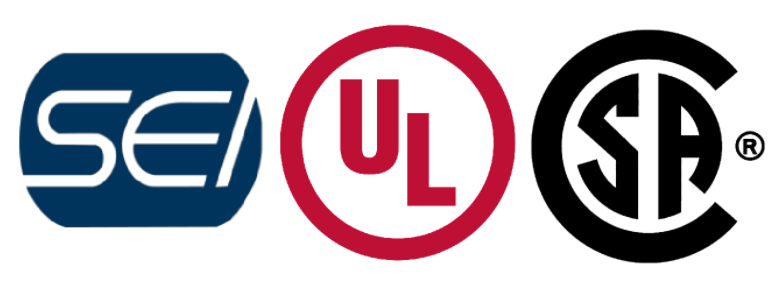
Look for a clear logo from an accredited third-party certifier. Some of the most common PPE certification bodies in North America are:
- SEI (Safety Equipment Institute) – Firefighter & First Responder PPE, Safety Helmets & Eyewear, Safety Footwear, Sports & Equestrian Equipment
- UL (Underwriters Laboratories) – Firefighter & First Responder PPE, Safety Helmets & Eyewear, Safety Footwear
- CSA (CSA Group) – Safety Helmets & Eyewear, Safety Footwear
- NIOSH – US & Canada Respiratory PPE
- HECC (Hockey Equipment Certification Council) – Hockey Equipment
- Snell Foundation – Motorized Vehicle Safety Helmets
If you do not see one of these marks, the item is likely not properly certified.
Standard Number
This tells you exactly what the gear was tested against. Common examples:
- NFPA 1970 (1971) – Structural and Proximity Firefighting Ensembles
- NFPA 1950 (1977) – Wildland and Urban Interface Firefighting
- ANSI/ISEA Z89.1 – Industrial Head Protection (Hard Hats & Safety Helmets)
- NOCSAE ND002 – Football Helmets
- ASTM F1163 – Horseback Riding Headgear
In some instances a standard will specifically require a full compliance statement. This is very common with NFPA standards like NFPA 1970. An example would be:
“THIS STRUCTURAL FIREFIGHTING PROTECTIVE GLOVE MEETS THE REQUIREMENTS OF NFPA 1970(1971) 2025 EDITION. DO NOT REMOVE THIS LABEL!”
Traceability Information
Legitimate gear should include:
- Manufacturer name or brand
- Model number
- Date of manufacture
- Lot or serial number
Similar to the standard number, many standards (NFPA in particular) requires specific traceability information on the label, including primary materials of construction.
Care Instructions
Always check the washing and maintenance instructions. Improper care is one of the fastest ways to destroy PPE performance. Many standards have specific guidelines or companion documents (like NFPA 1850 that aligns with NFPA 1970) for care and maintenance.
Example: Reading a Firefighter Turnout Jacket Label
When you look at a turnout coat label, you should see:
- SEI or UL Certification Mark
- NFPA 1970 Compliance Statement
- Manufacturer Name and Model
- Care Instructions (Must be attached so that a deliberate action is required to remove them before the gear can be used)
Red Flags – What Should Make You Suspicious
- No third-party certification mark
- Only says “Meets NFPA” or “Meets ANSI” without a certifier logo
- Missing care instructions
- Labels that look cheaply printed
- No model number or traceability info
Quick Checklist Before You Buy
- Clear third-party certification mark (SEI, UL, CSA, etc.)
- Correct standard number
- Manufacturer name and model number
- Care and maintenance instructions
- Legible, professionally printed label
Pro Tip: Take a photo of the label when you receive new gear. This makes future inspections and replacements much easier.