
When you buy protective equipment — whether it’s firefighter turnout gear, industrial hard hats, safety eyewear, or sports helmets — you’ll see various PPE certification marks. All legitimate certifiers must be accredited to ISO/IEC 17065, the international standard that governs how certification bodies operate. This accreditation helps ensure consistent, impartial, and competent testing and certification processes.
What Does “Certified” Actually Mean?
Certification means an independent third-party organization (accredited to ISO 17065) has tested the product against a recognized standard and verified that it meets the minimum performance requirements.
This is very different from a manufacturer simply claiming their product “meets the standard.” True certification involves:
- Rigorous independent laboratory testing using standardized methods
- Factory audits and ongoing quality control checks
- Traceable labeling and documentation on the actual product
- A formal certification decision by the accredited body
For many categories — especially firefighter PPE — third-party PPE certification is mandatory under the standard (e.g., NFPA 1970). Without it, the gear cannot legally be labeled as compliant.
The Major Certification Bodies
Here are the primary third-party certifiers you’ll encounter:
SEI (Safety Equipment Institute)

Certification Mark
- One of the most recognized certifiers for firefighter PPE (SCBAs, thermal imagers, radios, turnout gear, helmets, gloves, boots, hoods, etc.)
- Leading certifier of industrial protective equipment (safety helmets, eyewear, eyewash/shower stations, footwear, etc)
- The only certifier of many North American sports products through partnership with NOCSAE
- Highly regarded for equine protective product certifications
UL (Underwriters Laboratories)

- One of the largest and most recognizable certification bodies in the world
- A major global certifier covering firefighter gear, industrial PPE, and much more
CSA Group
- Strong presence in both Canada and the U.S. (often shows C/US marks)
- Common for industrial safety products and some firefighter equipment
Intertek (ETL)

- Another accredited certifier offering competitive timelines across many PPE categories.
HECC
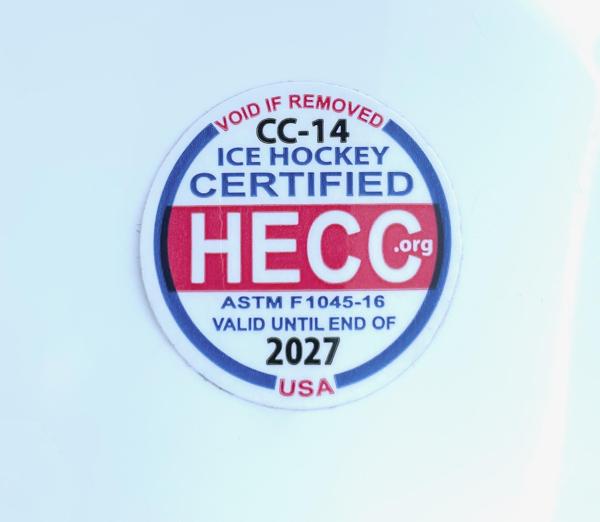
- Hockey Equipment Certification Council
Important Standards Development Organizations
Several well-known organizations develop the actual standards (the technical requirements) but are not PPE certifiers themselves:
- NFPA (National Fire Protection Association) — Develops key standards for firefighter PPE, including the widely used NFPA 1970.
- ANSI / ISEA — Develop standards for industrial PPE (hard hats, high-visibility clothing, eyewear, safety footwear, etc.).
- ASTM International — Develops a wide range of testing methods and standards used across firefighter, industrial, and sports PPE.
- NOCSAE — Develops performance standards for sports protective equipment (football, hockey, lacrosse, baseball helmets, etc.).
These organizations create the rules, but products are certified to their standards by accredited bodies like SEI, UL, or CSA.
How to Verify a Product Is Actually Certified
- Check the Label — Look for a recognized certifier’s mark (SEI, UL, CSA, ETL, etc.) plus the specific standard it meets.
- Look for Certification Numbers — Legitimate products typically include traceable model or file numbers.
- Search Official Databases:
- SEI: seinet.org
- UL: ul.com
- CSA: csagroup.org
- HECC: hecc.org
- Red Flags:
- Vague claims like “meets NFPA” or “ANSI approved” without a third-party certifier mark
- No certification label on the actual product
Bottom Line
Whether you’re buying turnout gear for the fireground, hard hats for a job site, safety glasses, or sports helmets, always look for PPE certification by an accredited third-party body. Standards development organizations like ASTM, ANSI/ISEA, and NOCSAE set the bar — but it’s the accredited certifiers who verify that the gear actually meets it.
Stay safe out there — verify before you buy.
1 thought on “Certification – The Who’s Who of PPE Certifications”